The Intellectual Double-Edged Sword

Missed this earlier — worth reading!

A snow house in Jerusalem

Ferrell Jenkins's avatarFerrell's Travel Blog

Elie sent me a photo he made this morning of a snow house in Jerusalem. If you know Jerusalem you know that the houses are built of stone (some of Jerusalem stone). The person building this snow house made it in imitation of the stone houses. It’s always good to have police protection!

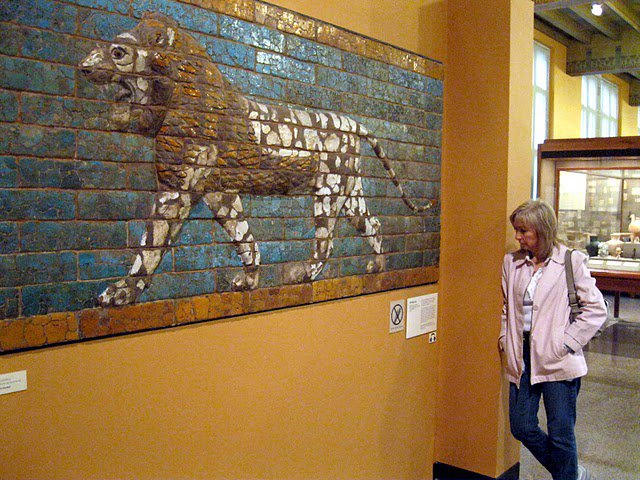
Benaiah the son of Jehoiada, one of David’s mighty men “went down and struck down a lion in a pit on a day when snow had fallen” (1 Chronicles 11:22 ESV)

View original post

Jesus wants you to judge

The Matt Walsh Blog's avatarThe Matt Walsh Blog

I’ve always been a pretty big fan of the Ten Commandments. My favorites is the one that says “Thou shalt not judge.”

Oh, that one isn’t in there, you say?

Sorry, it’s easy to forget nowadays, especially in this country where many Christians carry on as though the entire Bible could be summed up by the phrase, “it’s all good, bro.”

In actual fact, there are a lot of urgent truths and important moral lessons in the Bible. Interestingly, almost all of them have fallen out of favor in modern American society. Here are just a few verses that aren’t particularly trendy or popular nowadays:

(WARNING: Politically incorrect truths ahead)

“Whoever harms one of these little ones that believes in me, it would be better for him if a millstone where tied around his neck and he were drowned in the depths of the ocean.”

“Before I formed you in…
View original post 1,516 more words

Snow in Israel

Ferrell Jenkins's avatarFerrell's Travel Blog

Today I have been reading of snow in Lebanon and Israel. There are reports that a foot of snow has fallen in Jerusalem in the past day. Todd Bolen links to the Jerusalem Post (with photos) and other snow links here.

My friend Elie just sent a photo of his back yard. This is in Bar Giyora, a town on Hwy. 375 between Bethlehem and the Valley of Elah. The town is located in the hill country of Judea.

“For as the rain and the snow come down from heaven and do not return there but water the earth, making it bring forth and sprout, giving seed to the sower and bread to the eater, so shall my word be that goes out from my mouth; it shall not return to me empty, but it shall accomplish that which I purpose, and shall succeed in the thing for which I sent…

View original post 48 more words

Tolkien’s Kentucky Hobbits — Pinstripe Pulpit

Tolkien’s Kentucky Hobbits — Pinstripe Pulpit

Tolkien’s Kentucky Hobbits

Read more at Alan Cornett’s blog, Pinstripe Pulpit

http://pinstripepulpit.com/tolkiens-kentucky-hobbits/

I have been rereading J.R.R. Tolkien’s The Hobbit in anticipation of tomorrow’s movie release. When I first read There and Back Again thirty years ago as a boy in Kentucky the Shire seemed very far away. I would have loved to run into a round door in the side of one of the hills around my house.

One of the more interesting, and obscure, essays on the background of The Hobbit was written by the late Guy Davenport, and collected in his book The Geography of the Imagination. Davenport was a native of South Carolina, but spent most of his career as a professor at my alma mater, the University of Kentucky in Lexington. A Rhodes Scholar, and ultimately a genius certified by the MacArthur Foundation, Davenport is the sort of fellow who constantly exposes one’s own lack of knowledge and sophistication with every essay of his you read.

J.R.R. Tolkien

As a Rhodes Scholar at Merton College, Oxford, Davenport had been a student of Prof. J.R.R. Tolkien. Davenport writes in his short essay “Hobbitry” that Tolkien was a “vague and incomprehensible lecturer” who “had a speech impediment, wandered in his remarks, and seemed to think that we, his baffled scholars, were well up in Gothic, Erse and Welsh….How was I to know that he had one day written on the back of one of our examination papers, ‘In a hole in the ground there lived a hobbit’?”

But it was a chance encounter Davenport had in Shelbyville, Kentucky with a former classmate of Tolkien—a history teacher named Allen Barnett—that changed Davenport’s perspective about his former professor’s clever tales. To Davenport’s amazement, Barnett had no idea that Tolkien had turned into a writer, and had never read any of the adventures of Middle Earth.

“Imagine that! You know, he used to have the most extraordinary interest in the people here in Kentucky. He could never get enough of my tales of Kentucky folk. He used to make me repeat family names like Barefoot and Boffin and Baggins and good country names like that,” Barnett told Davenport.

“And out the window I could see tobacco barns,” Davenport writes. “The charming anachronism of the Hobbits’ pipes suddenly made sense in a new way….Practically all the names of Tolkien’s hobbits are listed in my Lexington phonebook, and those that aren’t can be found over in Shelbyville. Like as not, they grow and cure pipe-weed for a living.”

It is no surprise, then, that Wendell Berry, a friend and colleague of Davenport, writes hilariously about the adventures of fictional Kentucky farmer Ptolemy Proudfoot, not named after a hobbit, but rather the genuine country people of Kentucky.

When I first read Davenport’s “Hobbitry” twenty years ago I felt like the earth had moved. It was revolutionary! I had grown up around that tobacco and those tobacco barns.

New Zealand may provide the dramatic scenery for Peter Jackson’s movies, but it was the rolling hills and tobacco country of Kentucky that was the real backdrop for Tolkien’s Shire.

The Shire hadn’t been as far away as I thought.

Read more at Alan Cornett’s blog, Pinstripe Pulpit — http://pinstripepulpit.com/tolkiens-kentucky-hobbits/

Zondervan Essential Atlas of the Bible

Ferrell Jenkins's avatarFerrell's Travel Blog

Frequently we have mentioned and recommended the Zondervan Atlas of the Bible by Carl G. Rasmussen. Every Bible student needs at least one or two good atlases to assist them in their study of the Scriptures.

Last month I attended some annual professional meetings in Baltimore and was pleased to see that Zondervan already had copies of the new Zondervan Essential Atlas of the Bible. One of the sales reps gave me a copy for review here.

At first appearance, the ZEAB has a beautiful cover of stiff, durable paper. It is a convenient 9 1/8″ x 7 3/8″ in size. The content is basically the same as the larger hard back edition. There has been some editing of the text to condense the book from 303 pages to 159 pages.

There are two major sections to the book: Geographical Section and Historical Section. The Geographical Section includes an Introduction to the…

View original post 256 more words

Southern Gateways of the Levant, Part 1 — Geography of Philistia

Looking forward to having Trent & Rebekah in Chicagoland!

Judges 4: Where are the men?

Judges 4: Where are the men?.