The Ancient Library of Alexandria: The West’s most important repository of learning

The Ancient Library of Alexandria: The West’s most important repository of learning

The Ancient Library of Alexandria: The West’s most important repository of learning

J. Harold Ellens   •  05/01/2013

J. Harold Ellens’s article “The Ancient Library of Alexandria” originally appeared in Bible Review, along with the sidebars “Greco-Roman Philosophers,” “Whither Aristotle’s Library?” “The Perils of the Alexandria Library: Two Ancient Book-Burnings,” “How to Measure the Earth” and “Alexandria Library Redux.”  

Excerpt follows; read more at http://www.biblicalarchaeology.org/daily/biblical-sites-places/biblical-archaeology-places/the-ancient-library-of-alexandria/

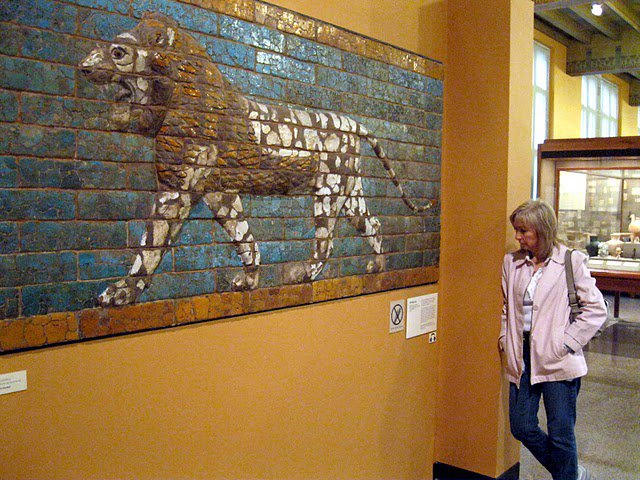
When Alexander the Great died in 323 B.C.E., the Ptolemaic dynasty was given control of Egypt. Ptolemy I (c. 367–283 B.C.E.) established his capital at Alexandria and immediately began to build up the city. Ptolemy’s grandest project, begun in 306 B.C.E., was the Library of Alexandria, a research center that held one million books by the time of Jesus. Scala/Art Resource, NY

——————————————————-

In March of 415 C.E., on a sunny day in the holy season of Lent, Cyril of Alexandria, the most powerful Christian theologian in the world, murdered Hypatia, the most famous Greco-Roman philosopher of the time. Hypatia was slaughtered like an animal in the church of Caesarion, formerly a sanctuary of emperor worship.1 Cyril may not have been among the gang that pulled Hypatia from her chariot, tearing off her clothes and slashing her with shards of broken tiles, but her murder was surely done under his authority and with his approval.

Cyril (c. 375–444) was the archbishop of Alexandria, the dominant cultural and religious center of the Mediterranean world of the fifth century C.E. He replaced his uncle Theophilus in that lofty office in 412 and became both famous and infamous for his leadership in support of what would become known as Orthodox Christianity after the Ecumenical Council of Chalcedon (451), when basic Christian doctrine was solidly established for all time.

Cyril’s fame arose mainly from his assaults on other church leaders, and his methods were often brutal and dishonest. He hated Nestorius, bishop of Constantinople, for example, because Nestorius thought Christ’s divine and human aspects were distinct from one another, whereas Cyril emphasized their unity. At the Council of Ephesus in 431, Cyril arranged for a vote condemning Nestorius to take place before Nestorius’s supporters—the bishops from the eastern churches—had time to arrive. Nor was Cyril above abusing his opponents by staging marches and inciting riots. It was such a mob, led by one of Cyril’s followers, Peter the Reader, that butchered the last great Neoplatonic philosopher, Hypatia.      ……..

One reason Cyril had Hypatia murdered, according to the English historian Edward Gibbon, was that Cyril thought Hypatia had the political ear of Alexandria’s chief magistrate, who vigorously opposed Cyril’s ambition to expel from the city those who held different religious views from his own.  Cyril was also jealous of Hypatia because scholars from all over the world crowded into her lectures in Alexandria, Athens and elsewhere. Socrates (380–450), a church historian from Constantinople, says of Hypatia:

[She] was so learned that she surpassed all contemporary philosophers. She carried on the Platonic tradition derived from Plotinus, and instructed those who desired to learn in…philosophic discipline. Wherefore all those wishing to work at philosophy streamed in from all parts of the world, collecting around her on account of her learned and courageous character. She maintained a dignified intercourse with the chief people of the city. She was not ashamed to spend time in the society of men, for all esteemed her highly, and admired her for her purity.

Hypatia’s father, Theon, was a leading professor of philosophy and science in Alexandria. He had prepared a recension of Euclid’s Elements, which remained the only known Greek text of the great mathematician’s work until an earlier version was discovered in the Vatican Library in this century.  Theon also predicted eclipses of the sun and moon that occurred in 364.

Hypatia, who was born about 355, collaborated with her father from early in her life, editing his works and preparing them for publication. According to one authority, she was “by nature more refined and talented than her father.”7 The extant texts of Ptolemy’s Almagest and Handy Tables were probably prepared for publication by her.8

Such scientific and philosophical enterprises were not new or surprising in Hypatia’s Alexandria, which already boasted a 700-year-old, international reputation for sophisticated scholarship. Founded in 331 B.C.E.9 by command of Alexander the Great, the city contained almost from its beginnings an institution that would remain of immense importance to the world for the next 2,300 years. Originally called the Mouseion, or Shrine of the Muses, this research center and library grew into “an institution that may be conceived of as a library in the modern sense—an organization with a staff headed by a librarian that acquires and arranges bibliographic material for the use of qualified readers.”   ….

Indeed, the Alexandria Library was much more. It “stimulated an intensive editorial program that spawned the development of critical editions, textual exegesis and such basic research tools as dictionaries, concordances and encyclopedias.”11 The library in fact developed into a huge research institution comparable to a modern university—containing a center for the collection of books, a museum for the preservation of scientific artifacts, residences and workrooms for scholars, lecture halls and a refectory. In building this magnificent institution, one modern writer has noted, the Alexandrian scholars “started from scratch”; their gift to civilization is that we never had to start from scratch again.

+++++++++++++++++++++++++++++++++

Notes

a. The best-known book collected from a non-Greek culture and translated into Greek at the library was the Hebrew Bible, known in its Greek form as the Septuagint (LXX). It seems to have reached the state of a largely completed and official Greek text between 150 and 50 B.C.E. Philo Judaeus (30 B.C.E.–50 C.E.) obviously knew and worked with a Greek version of the Hebrew Bible.

1. Maria Dzielska, Hypatia of Alexandria, trans. F. Lyra (Cambridge, MA: Harvard Univ. Press, 1995), p. 93. Cf. J. Harold Ellens, The Ancient Library of Alexandria and Early Christian Theological Development, Occasional Papers 27, Institute for Antiquity and Christianity (Claremont: Claremont Graduate School, 1993), pp. 44–51.

See also Edward A. Parsons, The Alexandrian Library, Glory of the Hellenic World: Its Rise, Antiquities, and Destructions (London: Cleaver-Hume, 1952), p. 356.

++++++  Much more at http://www.biblicalarchaeology.org/daily/biblical-sites-places/biblical-archaeology-places/the-ancient-library-of-alexandria/

Fake “Experts”

Fake “Experts”

While most people might ask, “Who?” – followed quickly by “Who cares?” – regarding the author of yet another pseudo-“scholarly” book about Jesus, evidently the latest installment in the long and undistinguished line of pulp fiction benefited from an virally inept cable-TV interview. As new-media commentator Joe Carter points out, the REAL missed story here is not what is known about Jesus, but that author’s own self-promotional misrepresentation of his credentials.

My, my – where are all the “investigative journalists” when you really need them? And why does the news media – of all stripes and flavors – insist on putting people on air who make fake claims to be “scholars” when they have no real expertise in the areas they write about? Excerpts:

Snickering at FoxNews while getting duped by ‘Zealot’ author

July 29, 2013 By Joe Carter

…  critics are right about the interview — it is a mess. But while New Media journalists were snickering at FoxNews.com, they failed to notice that the person being interviewed was pulling one over on them by getting away with misrepresenting his credentials.

…….

The first question by host Lauren Green on why a Muslim would want to write about Jesus isn’t as out of line as the Fox critics seem to think. It’s a fair question — a softball question — that allows the interviewee to explain away any apparent bias. But Green should have moved on after asking it and not made Aslan’s religious background the primary focus of the interview. More importantly, if she had been better prepared she could have called Aslan out for at least one blatant and seemingly undeniable untruth.

After being asked the first question by Green, Aslan responds:

 “…So it’s not that I’m just some Muslim writing about Jesus I am an expert with a PhD in the history of religions.” Later in the video he says it’s his job as a “professor of religion including the New Testament. That’s what I do for a living, actually.” And to make sure we get the point, he later adds, “I am a historian. I am a PhD in the history of religions.

At this point, Green should have stopped him and asked him to clarify since he appears to be misrepresenting his credentials.

For starters, he does not have a PhD in the history of religions. Aslan has four degrees: a Bachelors of Religious Studies from Santa Clara University; a Master of Theological Studies from Harvard Divinity School; a Master of Fine Arts in Creative Writing from the University of Iowa; and a PhD in sociology of religions from the University of California, Santa Barbara (his dissertation was on “Global Jihadism: a transnational social movement”).

Why would Aslan claim he has a PhD in history when his degree is in sociology? Does he not understand the difference between the two fields of study?

Aslan also claims that he has a degree in the New Testament. But is this true? Santa Clara doesn’t offer a degree in the New Testament so he can’t be talking about his Bachelors. Perhaps he is referring to the Master’s of Theological Studies degree he earned from Harvard Divinity School in 1999. That school does offer an “area of focus” in “New Testament and Early Christianity.” Is Aslan claiming this was his degree’s area of focus at Harvard? (If so, this would make his claim about having a “degree in New Testament” misleading, at best.)

……………….

When exactly has Aslan taught classes on the New Testament? And as a scholar, has he published peer-reviewed academic articles on Jesus?

Aslan’s book should not be dismissed because it was written by a Muslim. But in making untrue claims about his credentials he raises questions about his credibility. It also raises the question of how often so-called experts and authorities with no real expertise or authority on a subject are presented by New Media outlets as representative “scholars.”

Maybe if these journalists spent less time mocking the gaffes of their competitors and more time vetting the so-called “experts” we wouldn’t have to listen to people snicker about the credibility of online media.

++++++++++++++++++++++

Read more at http://www.patheos.com/blogs/getreligion/2013/07/snickering-at-foxnews-while-getting-duped-by-zealot-author/#more-108675

Laboratory in the Sand: The Diet of Pyramid Builders

Laboratory in the Sand: The Diet of Pyramid Builders

The Diet of Pyramid Builders – University of Michigan Research

July 22, 2013 | by Katie Vloet

Who built them—slaves, or well-compensated workers? How were they built? What are they made of? What do they symbolize?

Nearly everything about the Egyptian pyramids raises questions and inspires scientific investigation; they are the classic riddle, wrapped in a mystery, inside geometric walls of limestone.

One of the greatest mysteries: What did the pyramid builders eat?

It had to be enough to sustain the workers through grueling days, weeks, years. Research led by Richard Redding, a research scientist at the Kelsey Museum of Archaeology, has helped shed light on the answer to this question. In short, the builders ate meat. Lots and lots of meat. Often with a side of meat.

“They probably had better diets than [people] did in the village. They definitely had more meat,” said Redding, (’71, Ph.D. ’81), also chief research officer and archaeozoologist at Ancient Egypt Research Associates (AERA), a nongovernmental organization that runs a field school at the Giza pyramids.

Bringing Up the Bones

Redding’s team made the discovery of the meat-heavy diet based on 175,000 animal bones and bone fragments found at the Giza pyramid settlement—mostly cattle, sheep, and goats, with a smaller number of pig bones. He and other archaeologists from AERA, along with other U-M archaeology students who worked at the site through the years, studied the bones to estimate the large amount of meat that would have gone to the workers. They also looked for an explanation of where the animals were raised and slaughtered.

They made the assumption, based on their findings, that the Giza settlement was run by a central authority or administration. “The administrators would have organized drives of sheep, goats, and cattle from the Nile Delta, along the edge of the high desert, to move the required animals to Giza,” Redding said. The workers’ town was located about 1,300 feet south of the Sphinx, and was used to house workers building the pyramid of the pharaoh Menkaure. The process of taking the meat directly to the workers inspired a news headline about Redding’s research that read, “Ancient Burger Vans.”

While Redding and his AERA team are looking at animal bones, their main goal isn’t to learn more about the animals but rather the people who built the only one of the Seven Wonders of the Ancient World still in existence.

“We’re trying to humanize the pyramids, to put people there, by finding out where the workers lived and how they lived,” said Redding, who began working on Old Kingdom sites in Egypt since 1983 after leaving a politically turbulent Iran.

Math, Maps, and Herds

Unearthing the details about the workers’ lives is a long, often tedious process of, for instance, sorting the tens of thousands of animal bones, while also applying Redding’s rich knowledge of animal behavior to figure out how the raising and transport of such huge numbers of animals was possible in ancient times.

++++++++++++++++++++++++++++++++++++++++++++++++++++++++++++++++++++

Read more at:  http://www.lsa.umich.edu/lsa/ci.thedietofpyramidbuilders_ci.detail

NYT: Did Religious Liberalism Win the Culture War?

NYT: Did Religious Liberalism Win the Culture War?

A Religious Legacy, With Its Leftward Tilt, Is Reconsidered

By JENNIFER SCHUESSLER  —  Published: July 23, 2013

For decades the dominant story of postwar American religious history has been the triumph of evangelical Christians. Beginning in the 1940s, the story goes, a rising tide of evangelicals began asserting their power and identity, ultimately routing their more liberal mainline Protestant counterparts in the pews, on the offering plate and at the ballot box.

But now a growing cadre of historians of religion are reconsidering the legacy of those faded establishment Methodists, Presbyterians and Episcopalians, tracing their enduring influence on the movements for human rights and racial justice, the growing “spiritual but not religious” demographic and even the shaded moral realism of Barack Obama — a liberal Protestant par excellence, some of these academics say.

After decades of work bringing evangelicals, Mormonsand other long-neglected religious groups into the broader picture, these scholars contend, the historical profession is overdue for a “mainline moment.”

As one commenter put it on the blog Religion in American History, “It’s heartening that dead, white, powerful Protestants are getting another look.”

In the last year, some half-dozen books on the subject have been published; Princeton and Yale have held conferences dedicated to religious liberalism, and the recent annual meetings of the American Historical Association and the American Academy of Religion included panel discussions on the topic.

“We now have quite a lot of good stuff on evangelical Protestantism,” said David A. Hollinger, an intellectual historian at the University of California, Berkeley, who delivered a provocative presidential address to the Organization of American Historians in 2011, defending the legacy of what he called ecumenical Protestantism.

“But we ought to be studying the evangelicals,” Mr. Holligner added, in “relation to the people they hated.”

Hated is certainly the word, and the feeling went both ways. In a 1926 editorial on the Scopes trial, TheChristian Century, the de facto house magazine of mainline Protestantism, dismissed fundamentalism as “an event now passed,” a momentary diversion along the march to modern, rational faith.

But by the 1940s evangelicals were mobilizing against the United Nations and other causes endorsed by mainline leaders, many of whom were later denounced as Communists in Christianity Today, the magazine founded in 1956 by the Rev. Billy Graham. The Century shot back, running editorials denouncing Mr. Graham as a Madison Avenue-style huckster leading a “monstrous juggernaut” that threatened to “set back Protestant Christianity a half-century.”

Mr. Graham’s magazine won the immediate battle for readers, surging past The Century in circulation within a year — a sign, Elesha J. Coffman argues in her new book, “The Christian Century and the Rise of the Protestant Mainline,” that The Century’s editors, mostly trained at the same elite institutions, were never as representative of the Protestant majority as they claimed to be.

But other scholars take a markedly different view. In “After Cloven Tongues of Fire: Protestant Liberalism in Modern American History,” published in April by Princeton University Press, Mr. Hollinger argues that the mainline won a broader cultural victory that historians have underestimated. Liberals, he maintains, may have lost Protestantism, but they won the country, establishing ecumenicalism, cosmopolitanism and tolerance as the dominant American creed.

++++++++++++++++++++++++++++++++++++++++++++++++++++

Read more at http://www.nytimes.com/2013/07/24/books/a-religious-legacy-with-its-leftward-tilt-is-reconsidered.html?smid=fb-share&_r=0

Move to part-time profs provokes possible censure – chicagotribune.com

Move to part-time profs provokes possible censure – chicagotribune.com

National Louis’ move to part-time profs provokes possible censure – 

chicagotribune.com

By Ron Grossman, Chicago Tribune reporter  —  June 13, 2013

Paul Gross shared his love of biology with students at National Louis University for 18 years and, like most academics with tenure, figured he was guaranteed a job for life.

But on April 16, 2012, he was disabused of that notion by an administrator who told him he was out of a job at the end of the semester and could come back only as a part-time teacher. He did, teaching one course a term for $1,440.

Gross’ abrupt tumble down the academic ladder has become an increasingly common story as colleges and universities across the country increasingly rely on less expensive, part-time faculty, said Anita Levy, a senior staff member at the American Association of University Professors. “It’s not a trend, but a fact.”

While adjuncts now do most of the teaching on all campuses, Chicago-based National Louis slashed its full-time staff so severely that an AAUP committee recommended the school’s administration be censured for violating the academic freedom of Gross and 15 other tenured professors.

The professors were among 63 full-time faculty dismissed in 2012 by National Louis, long known as a teachers college although it started as a business college in 1989. Over a two-year period, the university cut its full-time faculty in half.

National Louis President Nivine Megahed said the decision to jettison full-time faculty was necessary because of a nose dive in enrollment that put the school in financial peril. She predicted that other college presidents will confront the same tough choice.

“Either there will be a lot more censures or a lot more universities will close their doors,” said Megahed, who became president in 2010, just as the university was experiencing a steep decline in enrollments and tuition income.

The recommendation for censure is expected to be ratified during the AAUP’s annual meeting Saturday.

There are about 40 schools on AAUP’s censure list, and complaints to the organization based on this shift to adjuncts have been on the rise. Censure by the AAUP carries with it no legal penalty, but is a strike against a university’s reputation: Job applicants might look elsewhere; students could worry that it casts a shadow over their credentials.

Levy said schools often cooperate with her organization by taking measures to get their censure lifted.

Tenure, the other academic issue in this case, is widely seen as a vital protection of freedom of inquiry. Without it, professors might be tempted to pull their scholarly punches for fear of offending administrators or trustees and losing their jobs. Still, even tenured faculty can be fired in a few, specific situations.

Gross was told his discharge was because the biology department was being abolished and, with it, the courses he taught. The AAUP investigators rejected that claim, since science courses continued to be listed in the school’s catalog. Indeed, he was invited to teach one — as an adjunct.

“The replacement of a tenured faculty member with adjunct or nontenured faculty to teach the same or similar courses seems to us to be a clear violation of tenure,” the AAUP reported.

The drastic cuts Megahed said were necessary to balance National Louis’ books cost Gross and the other professors dearly. His salary and benefits as a full-time professor totaled $75,000 a year. In addition to a deep cut in pay, there was a psychological blow to his drop in status.

Biology wasn’t just a way to earn a living for Gross but a passion, as witnessed by his modest suburban home. Inside and out, it reflects the great two divisions of his field: botany and zoology.

The lawn and backyard are planted in tall prairie grass. He and his wife share the family room with a dog named Willie Bear and a parrot named Olive. In the soft-spoken but authoritative voice Gross brought to the classroom, he explains how the bird will “regurgitate into (the dog’s) mouth, just like a mother bird feeding her young.”

Gross’ story can be read as a cautionary tale by families about to send a child off to college. Today, two-thirds of college instructors are not professors, but adjuncts. Add in lecturers and others on year-to-year contracts and the numbers of “contingent,” or nonpermanent, faculty rise to about 75 percent, according to Levy. At Chicago’s DePaul University, part-time instructors make up 64 percent of the faculty, for example.

College days for students used to involve not just listening to lectures but after-class contact with faculty over coffee. That informal dimension of higher education becomes more rare with adjunct teachers, who often hop from campus to campus to cobble together even a modest income.

“We call them Roads Scholars,” said Tom Anderson, an adjunct professor in Michigan who is vice president of two union locals that represent nontenured faculty.

Adjuncts are often assigned a course on the eve of a semester. Courses they teach are attributed to “staff.” The situation was satirically referred to in the title of a 2012 study released by the Center for the Future of Higher Education: “Who is ‘Professor Staff’ and How Can This Person Teach So Many Classes?”

The shift to more part-time teachers comes even as tuition has soared. Debra Humphreys, a vice president of the Association of American Colleges and Universities, reports a paradoxical relationship between tuition inflation and the increasing dependence on adjuncts: Even as colleges hire more adjuncts, the savings never seem to catch up to the increasing cost of running a campus.

The average undergraduate student at National Louis, long known for training teachers, pays a full-time tuition rate of $16,000 per year, a figure that takes into account scholarships and discounts, a university spokeswoman said. Average graduate program tuition ranges from $14,000 to $30,000

Megahed sees National Louis’ belt-tightening measures, and the risks she took implementing them, as in the university’s tradition of being an educational innovator.

The school was founded in 1886 to train kindergarten teachers by Elizabeth Harrison, a pioneering advocate for what is now called early childhood education. In 1930, when after several name changes it became the National College of Education, it established the first four-year teacher-training program in Illinois.

In 1990 it was renamed National Louis University in honor of a major donor, Michael Louis, whose generosity had enabled it to add degree programs in the humanities, the social sciences, the fine arts and a business school.

Fully accredited (its accreditation is being renewed during its current crisis), National Louis got a larger footprint on the national scene by establishing satellite campuses in Florida, Wisconsin and various locations in Illinois over the past 25 years. Its original campus in Evanston has been transplanted to Skokie.

In 2011, on the eve of the cutbacks, it had about 10,000 students. Most were part-timers, many who’d had a smattering of courses earlier at other colleges. When the American economy took a hit, so to did National Louis’ enrollment — a major disaster for a school that mostly turns out teachers instead of corporate executives whose donations can grow a university’s endowment.

“We went over a waterfall,” Megahed said. “Enrollment dropped 40 percent in five years.”

By 2012, when the AAUP’s investigation began after an appeal from some of the fired faculty members, Megahed said she and other administrators were working “24-7” trying to keep the university afloat.

She doesn’t dispute the AAUP’s charge that she refused to cooperate with their investigators, saying it wasn’t a priority, given all the problems she confronted. She was willing to roll the dice by declining the university’s best shot at justifying the dismissal of tenured faculty.

According to the AAUP’s guidelines, a university can dismiss tenured professors when confronting a financial exigency — a claim she didn’t make.

“The AAUP’s censure is less damaging than proclaiming a financial exigency,” Megahed explained. “That could cause lenders to call in our loans.”

She said other university presidents have congratulated her for getting the school through its financial crisis, which she takes as a sign that National Louis’ reorganization will be a model for others to follow, notwithstanding the pain it produced.

“2012 was the worst year of my career,” she said.

Yet it also was painful for those whose careers were ended and aren’t likely to find a silver lining. Among them is Ofra Peled, who as the head of biology was Gross’ superior.

When it was announced that cutbacks were in the offing, she figured she’d be the one who would be forced to tell a member of her three-person department they no longer had a job. It was a decision she dreaded.

“I was saved from having to make it,” Peled said. “They fired me, along with the other two.”

rgrossman@tribune.com

 Copyright © 2013 Chicago Tribune Company, LLC

http://www.chicagotribune.com/news/local/ct-met-national-louis-university-adjuncts-20130613,0,4525416,print.story

Lexington Theological Seminary Sells Campus to UK

Lexington Theological Seminary Sells Campus to UK

University of Kentucky to buy campus of Lexington Theological Seminary

Published: May 13, 2013

By Linda B. Blackford — lblackford@herald-leader.com

The University of Kentucky will buy the Lexington Theological Seminary’s 7-acre campus on South Limestone for $13.5 million, officials announced late Monday.

The UK Board of Trustees is expected to approve the deal at its meeting Tuesday, adding room for expansion on the west side of Limestone. The seminary has moved almost all of its instruction online since 2011 and plans to relocate to a smaller campus in Lexington.

“When high-quality space adjacent to your campus becomes available, the responsible thing is to explore the possibilities,” UK President Eli Capilouto said. “The Lexington Theological Seminary space represents great potential for the university as we grapple with how to grow and manage within our existing footprint.”

In the immediate future, UK plans to use seminary buildings as “swing space” for the Gatton School of Business as it starts a major renovation and expansion across the street.

The 63-year-old seminary property includes 131,000 square feet of built space, including four classroom buildings, 44 apartments, 16 townhouses, a maintenance building and a parking lot. For the past 20 years, about 75 percent of the seminary’s housing has been rented to UK students, said seminary President Charisse Gillett. UK officials said they would honor any current leases made with Lexington Theological Seminary for the next academic year, then fold those spaces into UK Housing.

Gillett said the seminary’s move — which she hopes will be to a downtown location — is part of the school’s new identity.

“Change for every academic institution is inevitable, and change has been our mantra,” she said Monday. “This is another step in our transformation and revitalization.”

Eric Monday, UK’s vice president of finance and administration, said the sale would be a cash deal, paid for with $13.5 million in excess funds created by increased enrollment last fall. Going forward, recurring money from increased enrollment will be used to soften budget cuts across campus, Monday said.

Bob Wiseman, UK’s vice president for facilities, said the seminary’s buildings probably would become a temporary home for various programs during the next five to 10 years as UK embarks on construction and renovation projects throughout campus.

Wiseman said the seminary’s academic buildings and housing spaces were in good physical shape. “With the amount of building we are doing, we have a great need for swing space,” he said. “This is very helpful for short-term.”

In addition, the 284-space parking lot will help ease UK’s chronic parking woes, he said. Wiseman said the new property would be folded into UK’s ongoing master planning process, but there are no immediate plans to designate a permanent use for the land. Although the property is across the street from UK’s law school, which is looking to expand, “you couldn’t easily reconfigure the space for a law school,” he said.

Lexington Theological Seminary was founded in 1865 as part of the Christian Church (Disciples of Christ). Gillett said the seminary once was on the campus of Transylvania University, then moved closer to UK when it became a residential seminary.

The 2008 economic downturn hit the seminary’s finances and enrollment hard, pushing the school to put much of its instruction online by 2011. Today, enrollment has climbed to about 110 students, 55 of whom are full-time. Most still seek a master’s degree in divinity, Gillett said, but a growing number of students are seeking certificates in pastoral ministry.

Half the coursework is online and half is done in congregations. Students also come to campus twice a year for two weeks of intensive residential instruction.

The seminary’s 23 full-time employees were notified about the sale Monday.

Gillett said the $13.5 million from the sale of the property would help establish a new location for the seminary and give the school more financial stability.

Linda Blackford: (859) 231-1359. Twitter: @lbblackford.

Footnote 19 – Richard John Neuhaus: Jesus and the Druid Princess

Footnote 19 – Richard John Neuhaus, ed. Theological Education and Moral Formation (Grand Rapids, MI: William B. Eerdmans Publishing Company, 1992), pp. 146-147.

Richard John Neuhaus was editor of the journal First Things, as well as the Encounter Series of volumes published by Eerdmans, of which this is Volume 15. Readers of this blog might also be interested in other volumes in the series, particularly volume 2 (Unsecular America) and volume 5 (The Bible, Politics, and Democracy).

Typically, each volume reports a conference in which four to six featured speakers delivered prepared addresses, following which those speakers and perhaps a dozen others joined in a panel discussion of the issues raised in the prepared speeches. This particular volume reports a conference at Duke University and offers some rare insight into the state of the denominational mentality in America, and I offer excerpts from three different sections of the round-table discussion for your amazement.

Philip Turner, Dean of Berkeley Divinity School, Yale University, speaking of the crisis of authority in the Episcopal church:

“My wife is a priest. In her diocese recently there was another priest who got into New Age channeling. One day she announced that her particular spirit had informed her that Jesus didn’t really die; he married a druid princess, and they had a little druids. This was the content of this priest’s teaching to a group in her church.  The senior warden of the parish thought that maybe something was wrong, so he called the bishop. The bishop, bless his heart, told the priest that she had three choices: she could recant, she could resign her orders, or she could undergo a heresy trial. Well, the bishop is the one who took the flak, because the dominant reaction was, ‘We’re Episcopalians, so we can believe what we want, and a bishop has no rights here.’”

New Republic: Affirmative Action

New Republic: Affirmative Action

Race-Based Affirmative Action Makes Things Worse, Not Better

The Supreme Court made clear last month that it would keep affirmative action racial preferences on the front burner of the national conversation for at least the next year. This autumn, the Court will review a federal appeals court’s 8-7 decision striking down a 2006 Michigan voter initiative that banned racial preferences in state university admissions. Meanwhile, the justices are drafting their opinions in a reverse-discrimination lawsuit by a disappointed white applicant to the University of Texas that was argued last October. That decision, the first major constitutional challenge to racial preferences since 2003, is expected by June 28.

With four ardent conservative opponents of racial preferences likely to be joined by Justice Anthony Kennedy—who has never upheld a racial preference—the Court seems likely to strike down the Texas program but not likely to outlaw racial preferences entirely. The Court also seems likely to reverse the federal appeals court decision in Michigan and uphold the state’s 2006 initiative banning racial preferences in state programs. (The issue there is not whether it’s unconstitutional for universities to use racial preferences excessively, but whether it’s unconstitutional for voters to prohibit them entirely.)

The big question, however, is whether the Court will rule so narrowly that its decisions will have little impact outside Texas and Michigan, or will, for the first time, impose serious restrictions on the very large racial preferences that are routine at almost all of the nation’s selective universities. Will these cases mean a dramatic overhaul, and shrinkage, of race-based affirmative action as we know it?

The question has never been more important or more complicated. A rapidly growing body of social science evidence shows that admissions preferences cause great harm to many of the supposed beneficiaries, and that such racial preferences make socio-economic inequality worse, not better. Racial preferences typically produce freshman classes with big SAT and GPA gaps among black, Hispanic, white, and Asian students. At the University of Texas, for example, the black-Asian mean SAT gaps have run above 450 points out of a total possible score of 2400. And studies suggest that many colleges systematically discriminate against high-achieving Asians, as they once did to Jews, to hold down their admission numbers.

STUDENTS ARE MUCH MORE LIKELY TO FORM FRIENDSHIPS IN COLLEGE WITH OTHER STUDENTS WHOSE LEVEL OF ACADEMIC PREPARATION IS SIMILAR TO THEIR OWN.

The two pending cases, and others, have focused on universities’ discrimination against whites and Asians, but the justices must be aware of recent research that casts doubt on the traditional presumption that racial preferences benefit recipients. For example, studies have shown that disproportionate percentages of preferentially admitted black freshmen who aspire to major in science and other tough subjects are forced by bad grades to move to softer majors—and that they would be more likely to achieve their ambitions had they gone to less elite schools for which they were better qualified.1

As for the benefits to white students, I don’t doubt that exposure to people of different races improves everyone’s education if it occurs naturally. But engineering diversity through racial preferences aggravates racial stereotypes and resentments and often leads to self-segregation and social isolation, as detailed in Russell Nieli’s powerful 2012 book, Wounds That Will Not Heal. Another study by Peter Arcidiacono and colleagues shows that students are much more likely to form friendships in college with other students whose level of academic preparation is similar to their own.

Social science evidence now shows that while passed-over whites and Asians suffer (modestly and temporarily, in my view) from race-based affirmative action, the more seriously damaged victims of large racial preferences are the many good black and Hispanic students who are doomed to academic struggle, and damaged self-confidence, when put in direct competition with academically much-better-qualified students. Universities misleadingly assure these students that they will do well, while ignoring and seeking to suppress evidence showing the enormous size of their preferences and poor academic results. No university of which I am aware, for example, tells its racial-preference recruits that more than half of black students end up in the bottom twenty percent of their college classes and the bottom ten percent of their law school classes.2 Racial preferences as used today pervert a once-egalitarian cause by pushing many fairly affluent black and Hispanic students ahead of working-class and poor Asians and whites. So addicted are the universities to racial preferences, and so fearful are most politicians of being trashed as racists, that the Supreme Court may be the only institution that could restore the original ideals of affirmative action.

I hope that in the Texas case, or perhaps in a future cases, the justices will order two modest reforms: order schools to disclose data showing the size, operation, and effects on academic performance of their racial preferences; and mandate that universities stop preferring blacks and Hispanics over better-qualified Asians and whites who are also less well-off.3 The first reform would equip admitted applicants and policymakers alike to make better-informed decisions. The second would provide healthy incentives for selective schools both to enroll more outstanding working-class and poor students and to reduce the mismatch problem.

It goes without saying that educational gaps are the biggest reason for the racial and socioeconomic inequality that cause such deep wounds in our social fabric. But the evidence shows that racial preferences make things worse, not better, by setting up many of our best black and Hispanic students for academic frustration, by neglecting our most promising working-class and low-income students, and by papering over the real problem.

The real problem is the huge racial gap in early academic achievement symbolized by the undisputed fact that the average black twelfth grader has acquired no more academic learning than the average white eighth grader. The real solution is to improve the education received by these children from birth through high school. Every bit of energy that is now being spent on sustaining a failed system of racial admissions preferences would be far better invested in teaching kids enough to make them academically competitive when they arrive at college.

Stuart Taylor, Jr., a Washington writer, is the coauthor with Richard Sander, a UCLA law professor, of Mismatch: How Affirmative Action Hurts Students It’s Intended to Help, and Why Universities Won’t Admit ItThey also filed a brief in the University of Texas case.

American Historical Association blog

American Historical Association blog

New Resource: Literature Criticism Online

New Resource: Literature Criticism Online.