Random Reflections from a Coronavirus Funeral Journey

Random Reflections from a Coronavirus Funeral Journey

As many readers are aware, my mother, Jean Wolfgang, passed away on March 31, and was buried on April 7, in Indianapolis. This necessitated two Chicago-to-Indy trips for Bette and myself, and allowed for some reflection on many things. I’ll share a few impressions here.

Deserted streets. I-65 had far fewer cars than ever before (and plenty of electronic signage reminding us to stay home except for “necessary” trips). But it was well-populated with trucks, bringing us all the stuff we have ordered on Amazon or InstaCart. But the far northeast side of Indianapolis (I-465 & I-69, 86th & 82nd Streets, etc.) is normally a hive of activity and traffic jams, now almost completely deserted.

It is strangely disorienting to stay in a Hampton Inn which has only three other rooms occupied (and one staff person). When we checked in late at night on the first trip, we increased the hotel population by 50%. The second night was crowded: triple the occupants — 10 rooms occupied. Four of them were truckers (at least, there were four big rigs in the parking lot, refrigeration equipment humming).

But no breakfast area, not even coffee (by order of the Department of Health – understandably). The generous Christian who donated points to cover our stay during the funeral commented, “Coronavirus has turned Hampton into a Motel 6!” My response: Nope. Hampton, even on 4 cylinders, is much better!

Thus, I made numerous trips foraging for food, discovering that the only food establishments consistently open, from Chicago to Indianapolis, were McDonald’s, Chick-fil-A, and an occasional Steak&Shake.

We did find that the Longhorn my parents liked, on Washington Street, was open for carry-out. In normal times, we often eat at a Chicago-area Longhorn for Sunday dinner. So I was able to get our usual Sunday meal, on Tuesday: Bette’s favorite salad with pecans, strawberries, orange slices, and grapes, festooned with steak strips from the Flo’s filet we usually get – tender enough to cut with a plastic knife!

We knew already, but re-learned, that Chick-fil-A servers are waayy friendlier than McDonald’s. They have created a culture of pleasantness. Our oldest grand-daughter, Ada, served at the second-largest CFA in Atlanta before the crisis, enjoyed it, and wants to return. They look for conscientious, friendly young people, and teach them the trade. But we do still like McDonald’s coffee much better!

Each time we stopped at a Chick-fil-A, there were numerous happy, pleasant young people, seriously concentrated on fulfilling their assigned tasks, but often laughing and having a good time working with each other and their customers in very unusual circumstances. The lines were long, stretching around the building and into adjacent parking areas, but very well-signed and organized and moving expeditiously, bustling with order takers and food deliverers. “My pleasure” – even through a mask.

On the central purpose for our trip: It is beyond weird to try to organize a funeral during the “present distress.” Severely reduced audiences (more than 100 for Dad’s service only 5 years ago; 7 for Mom’s service – barely enough for pallbearers). Physical distancing. Virtual fist bumps can never replace a good hug. A video of a short graveside service may provide some measure of closure for some, but it leaves others simply wanting “more.”

And, yes, the funeral homes are busy, and using “extra refrigeration,” as one funeral director put it. (Read: refrigerated semi-tractor-trailers to store the bodies).

But in one way it provided a sense of relief. Not just that Mom’s suffering (and frustration at being unable to speak much since her February strokes) is over. But relief, in a sense, for us as well who have been separated from her by this virus — unable to visit, or even talk much since her hand strength was not sufficient to dial or even answer her phone.

Though she was thankfully not afflicted with the virus, in another sense she was essentially taken prisoner by it due to the restrictions it caused. We were basically incommunicado for the last few weeks of her life, dependent upon helpful staff and Hospice nurses to dial her phone for her so we could speak, or occasionally see each other via Skype – and praying that she understood why we could not visit. Blessings upon all who cared for her during this time!

The last thing we saw, leaving the assisted living center after collecting her few earthly possessions, was a young couple, sitting in lawn chairs close to a window of a room in the nursing-home wing, separated but only inches apart from a loved one on the other side of the pane. For many, the struggle continues. May God have mercy!

And, finally and overwhelmingly, tremendous gratitude for the gift of a mother’s love, tendered by a Godly, diligent, intelligent, witty, and spiritual woman, and matched by her love for my father. May she rest in peace, and rise in glory!

P.S. Yes, a Memorial/Celebration of Life service is planned, TBA, at a future date when travel and other restrictions are lifted.


Todd Bolen tells the backstory of BiblePlaces Photos

From Ferrell Jenkins’ blog

Ferrell Jenkins's avatarFerrell's Travel Blog

This morning I was pleased to receive the BiblePlaces Newsletter (Vol 19, #1). In it Todd Bolen reminds us that “twenty years ago this month, BiblePlaces.com was born.” He provides us with a brief history of the development of his Photo Collections.

The Pictorial Library of Bible Lands. The Pictorial Library of Bible Lands – 18 volumes.

If you have ever used the images in The Pictorial Library of Bible Lands (now 18 volumes), The Photo Companion to the Bible, or one of the other resources developed under Bolen’s leadership, you know how valuable the material can be in teaching the Bible.

Bolen observes that he bought one of the set of 100 slides that used to be hawked by the guides on tours of Israel. My experience was much the same. Indeed, even if the photos were good but the quality of the duplication was not good.

I trust I have said enough…

View original post 104 more words

Ferrell’s Favorite Foto # 33 – Cave of Adullam

Ferrell Jenkins's avatarFerrell's Travel Blog

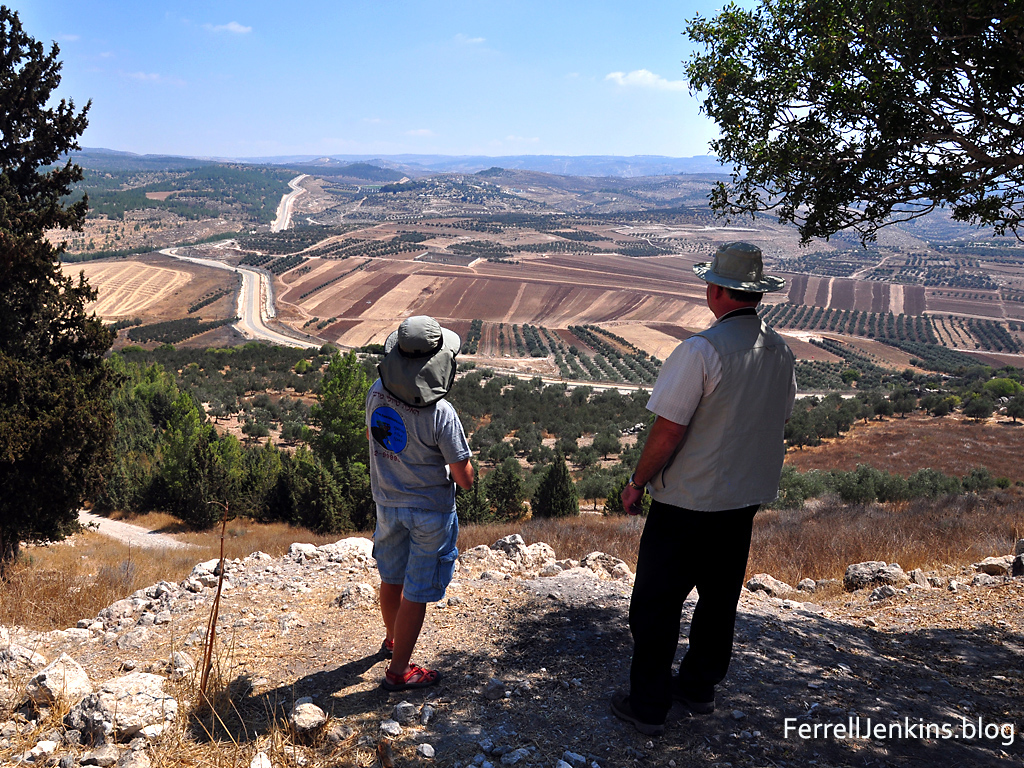
In 2011 Leon Mauldin and I make arrangements to visit Tel Adullam and the Cave of Adullam. I had gathered some information from Prof. Carl Rasmussen and Gordan Franz about locating the site. We secured the services of a guide from the small town of Aderet, a moshav on the north side of Adullam. She took us to the site in a four-wheel drive vehicle and explained what we were seeing.

Tel Adullam is near the Valley of Elah where David had met and defeated Goliath (1 Samuel 17).

View from Tel Adullam. Photo: ferrelljenkins.blog. Daphna, our guide, and Leon look east from Tel Adullam. Notice the central mountain range in the distance. Photo by Ferrell Jenkins.

Once we reached the forested mound we enjoyed a wonderful view to the east, and south. Our guide, Daphna, inquired first about our interest in the site. How did we even know about the site, she wondered. She is…

View original post 371 more words

Irven Lee, Part 2: The “Friendly Letter”

This an interesting 2012 blog from Chris Cotten, which bears repeating in a time of renewed discussion among Christians who deplore the antagonism and alienation of the past. A first installment, also re-blogged here, provides some context.

Chris's avatarAnastasis

This is the second of two posts dealing with Irven Lee and his “A Friendly Letter on Benevolence” (1958). The first post provided a sketch of Lee’s life; this post will make some observations about the “Friendly Letter.”
Open division was a reality in Churches of Christ across the country in 1958. The controversy over institutions that had erupted in the years during and after WWII mushroomed by the middle of the 1950s into a heated and often very personal dispute. This is not the place for a complete timeline of the controversy, but it might be worth pointing out a few of the things that contributed to the atmosphere in which Lee wrote in 1958.

In December 1954, B. C. Goodpasture published with approval a letter written by an anonymous elder calling for a “quarantine of the ‘antis.'” This opened the door to, and gave sanction to, the kind of…

View original post 1,619 more words

Irven Lee (1914-1991), Part I: Biography

This an interesting 2012 blog from Chris Cotten, which bears repeating in a time of renewed discussion among Christians who deplore the antagonism and alienation of the past. A second installment follows.

Chris's avatarAnastasis

At the conclusion of this semester’s classes, I’ll be turning my attention more fully to the Lewis research that you’ve been seeing in fragmentary form here. One of the things that fascinates me about Lewis is the degree to which one can understand him as a continuator/tradent of the Lipscomb-Harding theological synthesis among NI churches in the 1950s/60s.

But Lewis was not alone. Several other figures from a younger generation (relative to Lewis), to a greater or lesser degree, also fit this description. Interestingly, several of them can also (like Lewis) be found in North Alabama. Over the next couple of posts, I’ll be looking at one of these figures, Irven Lee (1914-1991). At the request of John Mark Hicks, I’ll offer here a few thoughts, historical and theological, on Lee and his “Friendly Letter on Benevolence” (1958).

I’ll do this in two parts: this post will…

View original post 1,202 more words

Footnote 37 – Missionary Work

FOOTNOTE 37 — Charles Randall Paul, Converting the Saints: A Study of Religious Rivalry in America (Salt Lake City: Greg Kofford Books, 2018), p. 168.

Franklin Spencer Spalding, raised in Denver and educated at Princeton University, became an Episcopal “missionary bishop” in Utah, attempting to convert Mormons to the Episcopal version of Christianity from 1905 until his death in 1914.

“A visiting banker from an Eastern city asked the bishop, ‘What difference does it make what the Mormons believe? What harm does it do if they love Joseph Smith and his teaching? What business is it of ours?’ Spalding replied, ‘Well, I must feel about their acceptance and teaching of what is intellectually and morally untrue, just as I suppose you would feel if you knew a group of people were coining and passing counterfeit money.’”

Father’s Day Biscuits

Father’s Day Biscuits

nfmymorningcoffee's avatarMy Morning Coffee

First things first, I am going to be at Maywood Christian Camp next week. So you will have to go without a fresh cup of coffee. But just a slight foreshadowing, we are only a few blogs away from number 100!!! So be sure not to miss out on that one.

There is a story about a family who enjoyed having breakfast for dinner every once in a while (I can relate). This particular evening after a long hard day at work, a mother brought plates to the table and her kids noticed that the plate she gave their dad had extremely burnt biscuits. The kids watched as their dad did not make a face or a comment, he just ate and when his wife apologized for the burnt he replied, “Honey, I loved burnt biscuits every now and then”. At bedtime, his kids asked him if he really liked…

View original post 281 more words

Michigan and the Parsonage Allowance

via Michigan and the Parsonage Allowance

Ring or no ring, Jesus stood before Pontius Pilate

Ferrell Jenkins's avatarFerrell's Travel Blog

By this time many people have heard the report on the news or read one of the numerous   articles stating that a ring possibly belonging to Pontius Pilate, the Roman prefect or procurator who condemned Jesus to be crucified, has been found.

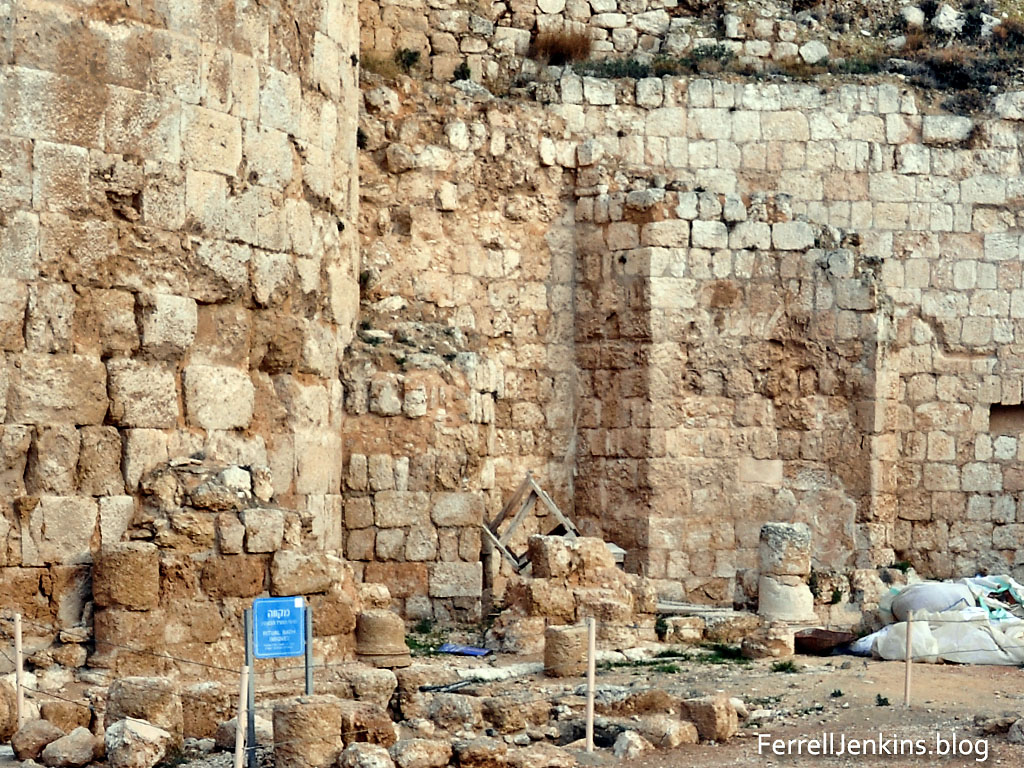
The scholarly article on which the reports have been based has been published in Israel Exploration Journal 68:2 (2018). The popular article in The Times of Israel (here) includes a black and white photo of the area in the Herodium where the ring was found. I searched my photos and discovered a color picture I made of the same area in 2011. Even then some reconstructive work was underway.

Photo of the Herodium made from the garden where the ring was discovered. Photo by Ferrell Jenkins. Photo of the Herodium made from the garden where the ring was discovered. Photo by Ferrell Jenkins in 2011.

Our aerial photo below shows the Herodium in December, 2009. Additional excavations continue to be made on the…

View original post 498 more words

New BiblePlaces photo collection of Persia

LukeChandler's avatarBible, Archaeology, and Travel with Luke Chandler

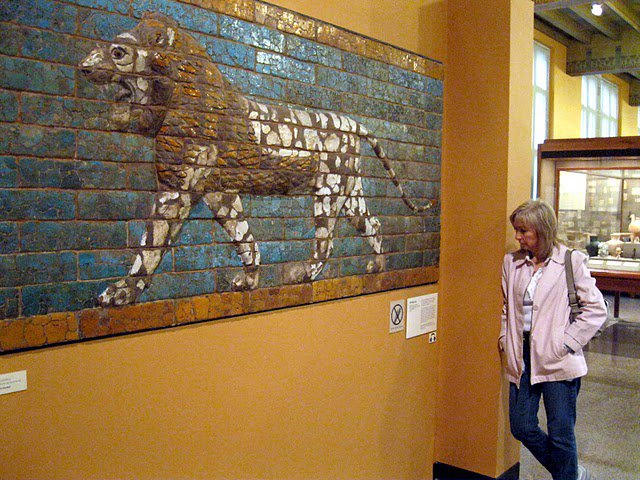
The fabulous BiblePlaces photo collection has a new addition most of us would not have expected to see. A 1,600 high-res photo volume on Persia is now available for purchase at the introductory price of just $25.

PersiaPLBLCoverCropped The new Persia volume of the BiblePlaces photo collection

Ancient Persia is of course modern Iran, which brings political barriers for many Western travelers, particularly from the United States. Todd Bolen was able to visit earlier this year and describes his experience in the new BiblePlaces newsletter.

… The trip was everything I could have hoped for and more. I was able to visit every site on my itinerary, following in the footsteps of such figures as Cyrus, Darius, Xerxes, and Artaxerxes. I saw the famous Behistun Inscription, walked around one of the best preserved ziggurats, explored numerous museums, and marveled at the well-preserved tomb of King Cyrus. You can still see the…

View original post 263 more words