Archaeology 101

Issue of Christian History Magazine on Stone-Campbell Movement forthcoming

Christian History Magazine

mac's avatareScriptorium

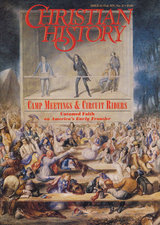
Christian History Magazine will release in September an issue devoted to the Stone-Campbell Movement.  Doug Foster and Richard Hughes collaborated as guest editors to assemble the first issue of CHM dedicated to the Restoration Movement.  About 20 years ago Barton Stone and Cane Ridge made an appearance in issue 45 on Camp Meetings & Circuit Riders…which you can download for free as a PDF here.  Judging from past issues, this installment will be a richly illustrated and accessible overview for the average reader who has some knowledge of and a keen interest in Christian history.  If you plan to teach Restoration history, consider ordering a bundle for distribution to your class; see CHM_BulkPricing for details.  An image from this blog and a small contribution from me even made their way into the issue!

View original post

The Atlantic: When Is a Royal Baby a Fetus?

The Atlantic: When Is a Royal Baby a Fetus?

When Is a Royal Baby a Fetus?

Technically, right up until the moment he’s born. And yet we’ve called him a baby the whole time. What media coverage of the recent pregnancy and birth has to do with abortion politics.
by  — JULY 24 2013, 9:12 AM ET

An excerpt:


Lefteris Pitarakis/AP Images

Moral philosopher James Q. Wilson wrote that humanity “has a moral sense.” Whether that moral sense is grounded in evolution, the image of God, or some other foundation, it sometimes leads us to act better than we speak. There are surprising moments, in other words, when our pre-conscious emotional and moral wiring responds to a situation in a way our more studied judgments would not permit.  A usually callous employee comforts a just-fired coworker in genuine sympathy. A man who hasn’t acted chivalrously in all his days instinctively holds a door open for a pregnant woman. A teenager roaming in one of those teenage-mall herds apologizes to a passer-by whom her friends have just mocked.

This week, as the U.K.’s Prince William and Kate Middleton were expecting their child at any moment, the impending birth received a galaxy’s worth of media coverage. That the child would be heir to the throne was a motivating factor in all this attention, to be sure. I was interested not only for this reason but for a less-noticed one: Countless media reports bore news about the “royal baby.”

Why was this noteworthy? Because this term, to get exegetical for a moment, was not used to describe the future state of the child—once born and outside of the womb, that is. No, the American media used this phrase “royal baby” to describe the pre-born infant. It’s not strange for leading pro-life thinkers like Eric Metaxas and Denny Burk to refer to a fetus as a “baby.” It’s not strange, either, for people to refer to a child they’re expecting as a “baby,” regardless of where they stand on the issue of abortion. It is strange, though, for outlets like the New York Times and the Washington Post and Boston Globe–which purport to be neutral on the issue–to use this seemingly explosive phrase without so much as a qualification. And why is this strange? Because it codes a pro-life position into their description of the unborn child.

I am a Christian who believes deeply in the sanctity of life, so for me, this language choice is revealing. The two most common arguments made today by thoughtful pro-choicers  are as follows: a) the being in the womb has no distinct personhood when in the mother’s body, as it is only a fetus and not yet a person (as seen in this ruling of a 2004 Houston court), or b) the fetus has some hard-to-define measure of personhood, yes, but a sufficient degree less personhood than the mother such that the mother may conscionably, though sometimes painfully terminate it (as in this New York Times essay). The linchpin of both of these arguments is location, closely related todependence. If the fetus is born, it is outside the womb and relatively independent of the mother. If the fetus is unborn, it is inside the womb, part of the mother’s body, and therefore dependent on the mother and subject to her decisions.

These arguments—which really are basically one and the same—have persuaded many people. The result, virtually enshrined into media law, is this: Pre-born beings are to be called fetuses, and post-birth beings are to be called babies. Here’s the New York Times referring to aborted babies as fetuses in the Kermit Gosnell trial, for example; NPR follows the same logicas does CNN. Fetuses, it seems, are essentially subhuman. Outside of the mainstream media, the rhetoric builds from this impersonal foundation. Not only are pre-born children subhuman; they are considered “clumps of cells,” in fact, or pre-human “seeds.” In both the mainstream media and the pro-abortion movement, fetuses are future humans being knit together in a woman’s body. They are not humans while in the womb. To kill them is not to kill a human, but something not-yet human.

How strange was it, then, that leading news sources referred to the fetus of William and Kate as the “royal baby.” There were no pre-birth headlines from serious journalistic sources like “Royal Clump of Cells Eagerly Anticipated” or “Imperial Seed Soon to Sprout.” None of the web’s traffic-hoarding empires ran “Subhuman Royal Fetus Soon to Become Human!” No, over and over again, one after another, from the top of the media food chain to the bottom, Kate’s “fetus” was called, simply and pre-committedly, a baby. Why was this? Because, as I see it, the royal baby was a baby before birth. The media was right; gloriously, happily right.

Like all babies-in-womb, in the months before Kate gave birth, the royal heir was spinning around, jabbing mom at inopportune moments, reacting in sheer physical bliss to the soothing sounds of dad’s voice, getting hungry, becoming sad and even agitated when voices were raised in marital conflict, sleeping, sucking its thumb, enjoying certain kinds of music, waking mom up in the night in order to do more spinning around/kicking, and eating hungrily what mom ate.

Thoughts for Both Sides of the Abortion Debate

How, if at all, does this “royal baby” phenomenon impact the current cultural debate over abortion? Here are a few thoughts for both sides of the abortion debate, pro-life and pro-choice alike.

+++++++++++++++++++++++++++++++++++++++++++

Read more at: http://www.theatlantic.com/sexes/archive/2013/07/when-is-a-royal-baby-a-fetus/278056/

Truth IS Stranger Than Fiction

Truth IS Stranger Than Fiction

Reblogging an interesting item sent to me by a friend who may prefer to remain anonymous.  Straight from the annals of “truth is stranger than fiction,” ponder this satirical take on WWII, cleverly deriding pretentious post-modern views of “reality,”  particularly the modern refusal to acknowledge real evil — since “everyone knows”  that any notion of plots to obliterate the family by redefining marriage, to destroy western and Christian culture by secularization and/or by demographic and militaristic growth of Islamist philosophy, etc. are just too far-fetched for even a TV series, much less real life!  (NB: blog excerpts omit language which some readers might find offensive).

“….the worst offender here is the History Channel and all their programs on the so-called ‘World War II.’  Let’s start with the bad guys. Battalions of stormtroopers dressed in all black, check. Secret police, check. Determination to brutally kill everyone who doesn’t look like them, check. Leader with a tiny villain mustache and a tendency to go into apopleptic rage when he doesn’t get his way, check. All this from a country that was ordinary, believable, and dare I say it sometimes even sympathetic in previous seasons.

I wouldn’t even mind the lack of originality if they weren’t so heavy-handed about it. Apparently we’re supposed to believe that in the middle of the war the Germans attacked their allies the Russians, starting an unwinnable conflict on two fronts, just to show how sneaky and untrustworthy they could be? And that they diverted all their resources to use in making ever bigger and scarier death camps, even in the middle of a huge war? Real people just aren’t that evil. And that’s not even counting the part where as soon as the plot requires it, they instantly forget about all the racism nonsense and become best buddies with the definitely non-Aryan Japanese.

Not that the good guys are much better…. It’s pretty standard “shining amazing good guys who can do no wrong” versus “evil legions of darkness bent on torture and genocide” stuff, totally ignoring the nuances and realities of politics. The actual strategy of the war is barely any better…. one example: in the Battle of the Bulge, a vastly larger force of Germans surround a small Allied battalion and demand they surrender or be killed. The Allied general sends back a single-word reply: “Nuts!”. The Germans attack, and, miraculously, the tiny Allied force holds them off long enough for reinforcements to arrive and turn the tide of battle. Whoever wrote this episode obviously had never been within a thousand miles of an actual military.

Probably the worst part was the ending. The British/German story arc gets boring, so they tie it up quickly, have the villain kill himself (on Walpurgisnacht of all days, not exactly subtle) and then totally switch gears to a battle between the Americans and the Japanese in the Pacific. Pretty much the same dichotomy – the Japanese kill, torture, perform medical experiments on prisoners, … and the Americans are led by a kindly old man in a wheelchair.

Anyway, they spend the whole season building up how the Japanese home islands are a fortress, and the Japanese will never surrender, and there’s no way to take the Japanese home islands because they’re invincible…and then they realize they totally can’t have the Americans take the Japanese home islands so they have no way to wrap up the season.

So they invent a completely implausible superweapon that they’ve never mentioned until now. Apparently the Americans got some scientists together to invent it, only we never heard anything about it because it was “classified.”  In two years, the scientists manage to invent a weapon a thousand times more powerful than anything anyone’s ever seen before.  Then they use the superweapon, blow up several Japanese cities easily, and the Japanese surrender. Convenient, isn’t it?

…and then, in the entire rest of the show, over five or six different big wars, they never use the superweapon again. Seriously. They have this whole thing about a war in Vietnam that lasts decades and kills tens of thousands of people, and they never wonder if maybe they should consider using the unstoppable mystical superweapon that they won the last war with. At this point, you’re starting to wonder if any of the show’s writers have even watched the episodes the other writers made.

I’m not even going to get into the whole subplot about breaking a secret code (cleverly named “Enigma”, because the writers couldn’t spend more than two seconds thinking up a name for an enigmatic code), the giant superintelligent computer called Colossus (despite this being years before the transistor was even invented), the Soviet strongman whose name means “Man of Steel” in Russian (seriously, between calling the strongman “Man of Steel” and the Frenchman “de Gaulle”, whoever came up with the names for this thing ought to be shot).

So yeah. Stay away from the History Channel. Unlike most of the other networks, they don’t even try to make their stuff believable.”

Entire entry at http://squid314.livejournal.com/275614.html

Harvard PhD, New York Times journalist ridiculed for expressing creationist beliefs

Harvard PhD, New York Times journalist ridiculed for expressing creationist beliefs

The Guardian: Andrew Brown’s Blog

Virginia Heffernan’s creationism is wrong but makes good sense

The tech writer understands that the biblical account is a story. It’s just one that she prefers over the stories told by science

God and Adam's hands about to touch in a detail from the Creation of Adam by Michaelangelo

‘In popular culture, arguments about evolution are not clashes of facts against stories. They are the clash of two competing stories.’ Photograph: World Films Enterprises/Corbis

A US writer, Virginia Heffernan, has just outed herself as a creationist. As she is currently earning a living writing on technology for Yahoo! News, this is a brave thing to do and has been greeted with obloquy, bemusement, and patronising explanations about the difference between facts and stories. Now of course evolution is true. Evolution is a fact: it happens. It’s also a predictive theory: it explains why things happen and have happened in ways that allow us to find out more about the world. It is something that I find fascinating, but there are lots of things that fascinate me, from fly fishing to philosophy, which I don’t expect the rest of the world to take an interest in.

In that respect, evolution is different. It has come to mean an explanation for everything, including all sorts of questions which were once, and rightly, treated as philosophical or ethical. Even more, it has come to be taken up as a banner in the American culture wars. In that context it is unattractive. If you want to know why an educated American might decide evolution is untrue, spend some time at the website Why evolution is true, run by the Chicago biologist Jerry Coyne. The science there is great, but the tone of voice is something else: hectoring arrogant mansplaining with sputtering outbursts of extraordinary viciousness. If you don’t much care whether the science is true, this would convince you that there must be something wrong with it.

+++++++++++++++++++++++++++++++++++++++++++++++++++++++++++

Read more at http://www.guardian.co.uk/commentisfree/andrewbrown/2013/jul/18/virginia-heffernan-creationism-nothing-wrong

My husband is not my soul mate.

Worth reading

Hannah's avatarThe Art in Life

It might seem odd that on this, our one-year anniversary, I am beginning a post with the declaration that my husband is not my soul mate. But he isn’t.WegmannWedding161

I wouldn’t want to imagine life without James. I enjoy being with him more than anyone else in this world. I love him more than I ever thought you could love someone, and I miss him whenever I am not with him. I wouldn’t want to married to anyone else other than James, which is good, because I plan on being married to him forever, and he has to let me die first.

But I reject the entire premise of soul mates.

WegmannWedding294Do you remember those awesome Evangelical 90’s/ early 2000’s where Jesus was kind of like our boyfriend and we all kissed dating good-bye because we just knew that God was going to bring us THE ONE and then life…

View original post 1,231 more words

Laboratory in the Sand: The Diet of Pyramid Builders

Laboratory in the Sand: The Diet of Pyramid Builders

The Diet of Pyramid Builders – University of Michigan Research

July 22, 2013 | by Katie Vloet

Who built them—slaves, or well-compensated workers? How were they built? What are they made of? What do they symbolize?

Nearly everything about the Egyptian pyramids raises questions and inspires scientific investigation; they are the classic riddle, wrapped in a mystery, inside geometric walls of limestone.

One of the greatest mysteries: What did the pyramid builders eat?

It had to be enough to sustain the workers through grueling days, weeks, years. Research led by Richard Redding, a research scientist at the Kelsey Museum of Archaeology, has helped shed light on the answer to this question. In short, the builders ate meat. Lots and lots of meat. Often with a side of meat.

“They probably had better diets than [people] did in the village. They definitely had more meat,” said Redding, (’71, Ph.D. ’81), also chief research officer and archaeozoologist at Ancient Egypt Research Associates (AERA), a nongovernmental organization that runs a field school at the Giza pyramids.

Bringing Up the Bones

Redding’s team made the discovery of the meat-heavy diet based on 175,000 animal bones and bone fragments found at the Giza pyramid settlement—mostly cattle, sheep, and goats, with a smaller number of pig bones. He and other archaeologists from AERA, along with other U-M archaeology students who worked at the site through the years, studied the bones to estimate the large amount of meat that would have gone to the workers. They also looked for an explanation of where the animals were raised and slaughtered.

They made the assumption, based on their findings, that the Giza settlement was run by a central authority or administration. “The administrators would have organized drives of sheep, goats, and cattle from the Nile Delta, along the edge of the high desert, to move the required animals to Giza,” Redding said. The workers’ town was located about 1,300 feet south of the Sphinx, and was used to house workers building the pyramid of the pharaoh Menkaure. The process of taking the meat directly to the workers inspired a news headline about Redding’s research that read, “Ancient Burger Vans.”

While Redding and his AERA team are looking at animal bones, their main goal isn’t to learn more about the animals but rather the people who built the only one of the Seven Wonders of the Ancient World still in existence.

“We’re trying to humanize the pyramids, to put people there, by finding out where the workers lived and how they lived,” said Redding, who began working on Old Kingdom sites in Egypt since 1983 after leaving a politically turbulent Iran.

Math, Maps, and Herds

Unearthing the details about the workers’ lives is a long, often tedious process of, for instance, sorting the tens of thousands of animal bones, while also applying Redding’s rich knowledge of animal behavior to figure out how the raising and transport of such huge numbers of animals was possible in ancient times.

++++++++++++++++++++++++++++++++++++++++++++++++++++++++++++++++++++

Read more at:  http://www.lsa.umich.edu/lsa/ci.thedietofpyramidbuilders_ci.detail
Do You Know What Your Kids Are Hiding?

Do You Know What Your Kids Are Hiding?

Do You Know What Your Kids Are Hiding?

Tuesday, June 4, 2013 at 7:01am by Robert Siciliano

Many of you as parents may think, “not much” when asked this question. But in reality, it’s probably a lot more than you think. So it should come as no surprise to anyone that McAfee’s 2013 study, Digital Deception: Exploring the Online Disconnect between Parents and Kidswhich examines the online habits and interests of tweens, teens, and young adults, finds there is a significant disconnect between what they do online and what their parents believe they do.

The phrase “liar liar, pants on fire” comes to mind when I hear this topic and the phrase applies to both parents and kids. Parents are lying to themselves if they think they know what their kids are doing online, since 80% said they would not know how to find out what their kids are doing online and 62% do not think that their kids can get into deep trouble online. As for our kids, let’s face it – kids sometimes lie. The study found that 69% of kids say that they know how to hide what they do online from their parents and disturbingly 44% of them cleared their browser history or used private browsing sessions to hide their activity from their parents.

While youth understand the Internet is dangerous, they still engage in risky (and sometimes illegal) behavior. Not only are they hiding this activity from their parents in a variety of ways, but almost half (46%) admit that they would change their behavior if they knew their parents were paying attention.

  • 86% of youth believe that social sites are safe and are aware that sharing personal details online carry risk, yet kids admit to posting personal information such as their email addresses (50%) and phone numbers (32%)
  • 48% have viewed content they know their parents would disapprove of
  • 29% of teens and college aged youth have accessed pirated music or movies online

+++++++++++++++++++++++++++++++++++++++++++++++++++++++++++++++++

READ MORE at https://blogs.mcafee.com/consumer/digital-divide

NYT: Did Religious Liberalism Win the Culture War?

NYT: Did Religious Liberalism Win the Culture War?

A Religious Legacy, With Its Leftward Tilt, Is Reconsidered

By JENNIFER SCHUESSLER  —  Published: July 23, 2013

For decades the dominant story of postwar American religious history has been the triumph of evangelical Christians. Beginning in the 1940s, the story goes, a rising tide of evangelicals began asserting their power and identity, ultimately routing their more liberal mainline Protestant counterparts in the pews, on the offering plate and at the ballot box.

But now a growing cadre of historians of religion are reconsidering the legacy of those faded establishment Methodists, Presbyterians and Episcopalians, tracing their enduring influence on the movements for human rights and racial justice, the growing “spiritual but not religious” demographic and even the shaded moral realism of Barack Obama — a liberal Protestant par excellence, some of these academics say.

After decades of work bringing evangelicals, Mormonsand other long-neglected religious groups into the broader picture, these scholars contend, the historical profession is overdue for a “mainline moment.”

As one commenter put it on the blog Religion in American History, “It’s heartening that dead, white, powerful Protestants are getting another look.”

In the last year, some half-dozen books on the subject have been published; Princeton and Yale have held conferences dedicated to religious liberalism, and the recent annual meetings of the American Historical Association and the American Academy of Religion included panel discussions on the topic.

“We now have quite a lot of good stuff on evangelical Protestantism,” said David A. Hollinger, an intellectual historian at the University of California, Berkeley, who delivered a provocative presidential address to the Organization of American Historians in 2011, defending the legacy of what he called ecumenical Protestantism.

“But we ought to be studying the evangelicals,” Mr. Holligner added, in “relation to the people they hated.”

Hated is certainly the word, and the feeling went both ways. In a 1926 editorial on the Scopes trial, TheChristian Century, the de facto house magazine of mainline Protestantism, dismissed fundamentalism as “an event now passed,” a momentary diversion along the march to modern, rational faith.

But by the 1940s evangelicals were mobilizing against the United Nations and other causes endorsed by mainline leaders, many of whom were later denounced as Communists in Christianity Today, the magazine founded in 1956 by the Rev. Billy Graham. The Century shot back, running editorials denouncing Mr. Graham as a Madison Avenue-style huckster leading a “monstrous juggernaut” that threatened to “set back Protestant Christianity a half-century.”

Mr. Graham’s magazine won the immediate battle for readers, surging past The Century in circulation within a year — a sign, Elesha J. Coffman argues in her new book, “The Christian Century and the Rise of the Protestant Mainline,” that The Century’s editors, mostly trained at the same elite institutions, were never as representative of the Protestant majority as they claimed to be.

But other scholars take a markedly different view. In “After Cloven Tongues of Fire: Protestant Liberalism in Modern American History,” published in April by Princeton University Press, Mr. Hollinger argues that the mainline won a broader cultural victory that historians have underestimated. Liberals, he maintains, may have lost Protestantism, but they won the country, establishing ecumenicalism, cosmopolitanism and tolerance as the dominant American creed.

++++++++++++++++++++++++++++++++++++++++++++++++++++

Read more at http://www.nytimes.com/2013/07/24/books/a-religious-legacy-with-its-leftward-tilt-is-reconsidered.html?smid=fb-share&_r=0

The Sea of Galilee and Mount Arbel from the NW

Ferrell Jenkins's avatarFerrell's Travel Blog

This photograph of the Sea of Galilee and Mount Arbel was made from highway 807.

From this point we can see the east side of the Sea of Galilee. Today we know it as the Golan Heights. In Old Testament times it was known as Bashan (Joshua 21:27). Golan was one of the cities of Refuge located in the area. In New Testament times this was the area of the Decapolis (Mark 7:31), and probably the country of the Gadarenes (Matthew 8:28).

Below Mount Arbel runs the Via Maris, the main road leading from the Turan Valley to Capernaum. This road allowed travel and commerce between Capernaum, Magdala, and Tiberias with the cities of Nazareth, Cana, Sepphoris, and Jotapata.

View original post