The Tenth Roman Legion in Jerusalem

Ferrell Jenkins's avatarFerrell's Travel Blog

Students of the Bible are aware that the city of Jerusalem, including the Herodian temple, was destroyed by the Romans in A.D. 70. Vespasian commanded the Romans in the north of the country. When he learned of the death of Nero he began his return to Rome and left his son Titus in command of the military forces.

When Titus began to position his forces around the city of Jerusalem, he called the tenth legion from Jericho to come up to the Mount of Olives and take their position there.

and as these were now beginning to build, the tenth legion, who came through Jericho, was already come to the place, where a certain party of armed men had formerly lain, to guard that pass into the city, and had been taken before by Vespasian. These legions had orders to encamp at the distance of three quarters of a mile from…

View original post 299 more words
Where the Romans breached Jerusalem wall

Ferrell Jenkins's avatarFerrell's Travel Blog

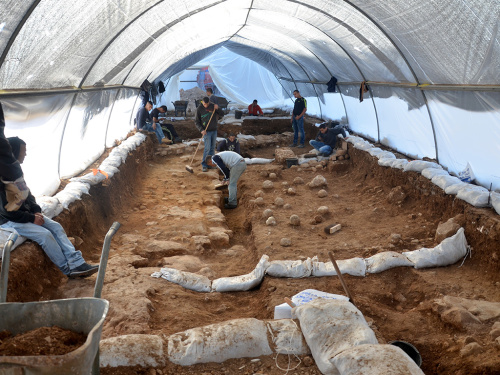
There is abundant evidence of the presence of the Romans in Jerusalem and the land they would later call Palestine. Now comes specific evidence of the place where Titus’ army breached the Third Wall of the city.

The excavation site in the Russian Compound. One can see the sling stones on the floor, which are tangible evidence of the battle that was waged here 2,000 years ago. Photographic credit: Yoli Shwartz, courtesy of the Israel Antiquities Authority. The excavation site in the Russian Compound. One can see the wall and sling stones on the floor, which are tangible evidence of the battle that was waged here 2,000 years ago. Photographic credit: Yoli Shwartz, courtesy of the Israel Antiquities Authority.

The Israel Antiquities Authority released this information earlier today.

— “ —

Impressive and fascinating evidence of the battlefield and the breaching of the Third Wall that surrounded Jerusalem at the end of the Second Temple period was uncovered last winter in the Russian Compound in the city center. The finds were discovered in an archaeological excavation the Israel Antiquities Authority conducted in the location where the new campus of the…

View original post 553 more words

Heat, steam and Roman cooking

From the British Museum blog — check it out!